Golf Trainer
A Multisensory Interactive System project built with Arduino, Pure Data and Processing to help improve golf performance
Logo
Situation
Traditional golf coaching often relies on delayed visual feedback, such as video playback or instructor critiques, which fails to provide the real-time, intuitive corrections necessary for effective motor learning. There was a need to explore how multisensory integration could enhance proprioceptive awareness and accelerate skill acquisition for both novice and expert golfers.
Task
The objective was to design and prototype a “smart” golf club capable of tracking swing dynamics—including speed, angle, and grip—and providing immediate, multimodal feedback. The goal was to reduce the learning curve for beginners while helping advanced players refine their technique through human-computer interaction (HCI) principles.
Action
- HCI Methodology & Theory: Grounded the design in Multisensory Integration Theory, Embodied Cognition, and Error Augmentation, using these frameworks to determine how the brain synthesizes simultaneous inputs to refine motor actions.
- Multimodal Interface Design: Developed a three-tiered feedback system:
- Visual: Integrated a Processing-based dashboard for trajectory analytics and LED arrays on the club to guide hand positioning and swing alignment.
- Auditory: Utilized Pure Data (PD) to generate real-time, directional sound effects that varied based on swing power and angle.
- Haptic: Programmed a vibration motor to provide tactile cues at the moment of impact or to signal improper swing motion.
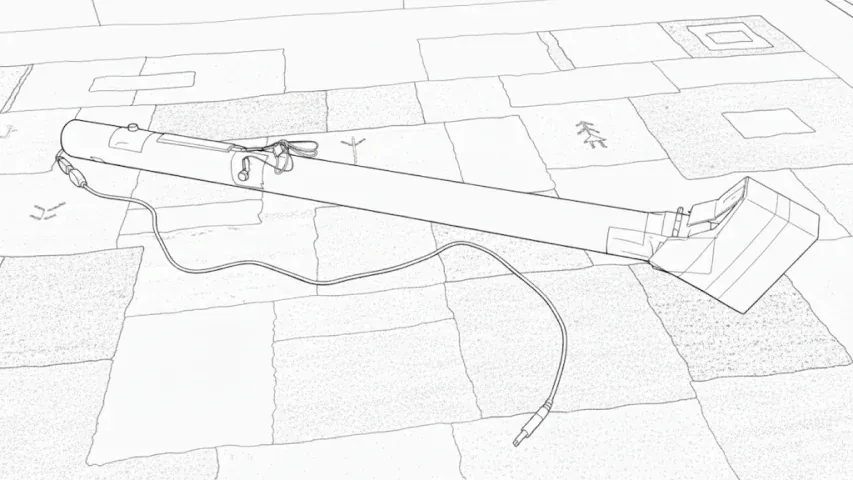
- Prototyping: Engineered a physical prototype using a Teensy 4.1 (Arduino) microcontroller, a 9-DOF BNO055 absolute orientation sensor, and linear ribbon sensors for precise grip detection.
- User Research & Evaluation: Conducted a between-subjects pilot study comparing three experimental conditions: Visual Only, Visual + Sound, and Visual + Sound + Haptics.
Result
- High Usability Impact: Quantified the user experience using the System Usability Scale (SUS), achieving high scores of 87.5 for experts and 76.67 for novices, indicating the system was functional and beneficial across skill levels.
- Validated Hypotheses: Results indicated that integrating multiple sensory modalities enhances training efficacy, particularly for beginners who may lack the established “muscle memory” of experts.
- Iterative Insights: Identified critical areas for UX refinement, such as the need for more precise haptic calibration and sensor stability, which 50-60% of participants highlighted during qualitative debriefing sessions.
Take a Look at the Project