Android Auto User Experience: Eye-Tracking and Usability Study
A comprehensive UX study evaluating Android Auto's usability and driver distraction through eye-tracking and HCI methodologies.
UX ResearchEye-TrackingHCI
2 min read
Situation:
With the rise of complex In-Vehicle Information Systems (IVIS) like Android Auto, driver distraction has become a primary cause of road accidents. There was a critical need to evaluate how these digital interfaces balance functionality with driver safety, specifically regarding cognitive workload and off-road fixations.
Task:
Directed a user study to evaluate the usability of Android Auto’s core features—navigation, music, and messaging—and to investigate how different interaction modalities (touch vs. voice) and driver experience levels impact distraction.
Action:
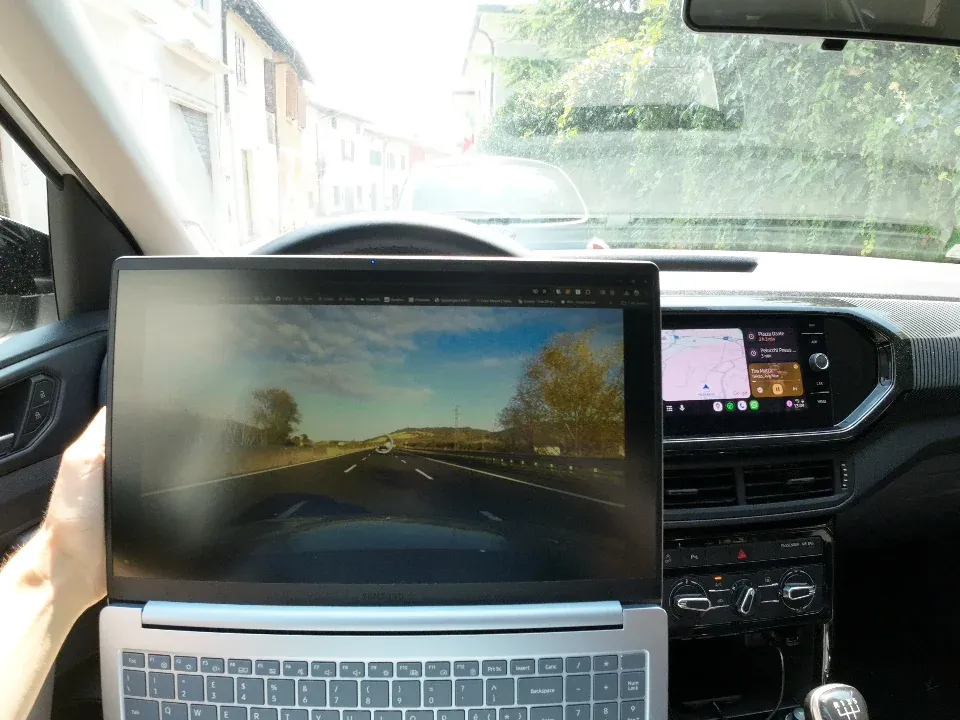
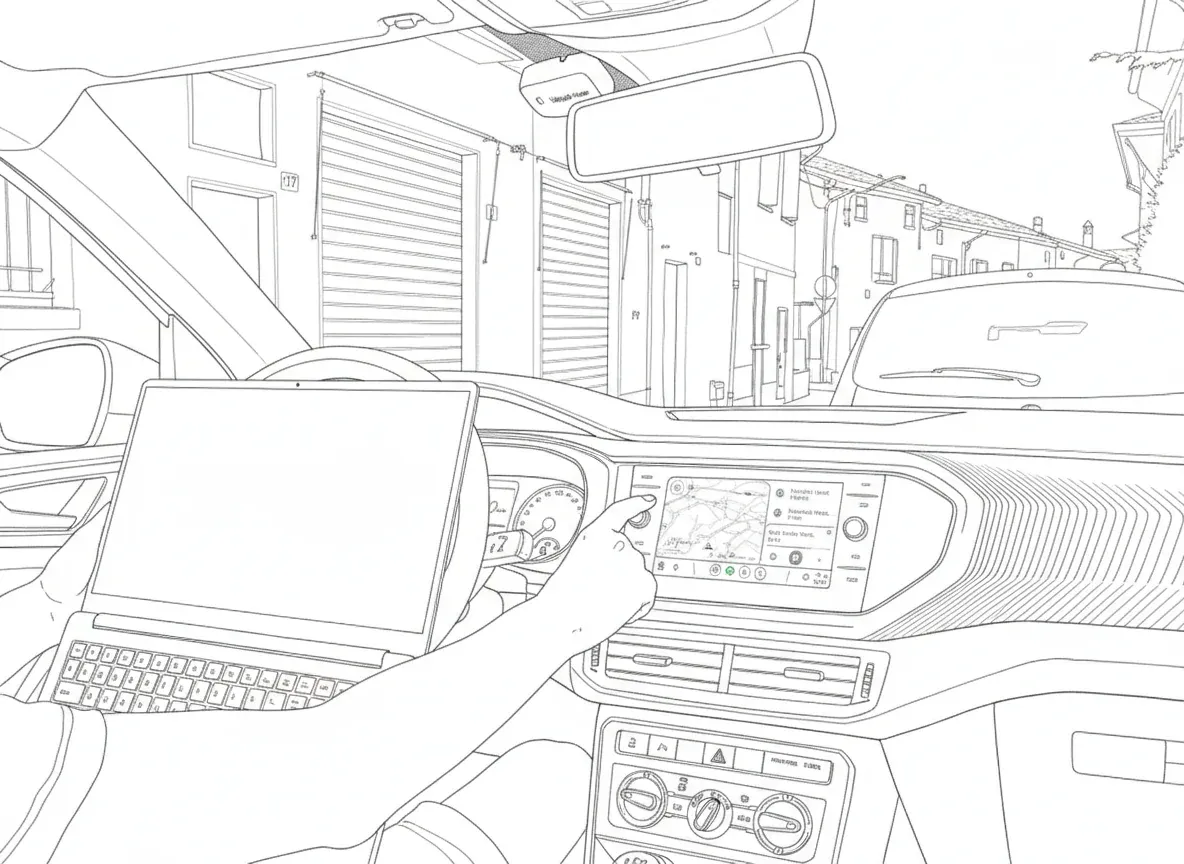
- Designed and executed a mixed-methods experiment involving eight participants in a controlled, stationary in-car environment with a simulated highway driving scenario.
- Developed and deployed custom eye-tracking software to collect quantitative data on glance frequency, timestamped events, and duration of interactions with the vehicle’s central console.
- Implemented a rigorous HCI methodology utilizing the Single Ease Question (SEQ) for task-specific assessment and the Usability Metric for User Experience (UMUX) to quantify overall system satisfaction and requirements fulfillment.
- Conducted qualitative analysis through open-ended post-test questionnaires and supervisor observations to identify specific pain points in UI components, such as keyboard autocompletion and voice assistant responsiveness.
Result:
- Quantified system usability with a UMUX score of 66.15/100, identifying a critical friction point in “time spent correcting errors” (sub-score of 52.08), particularly regarding on-screen keyboard typing for navigation.
- Identified that while voice interfaces improved perceived safety and speed in messaging, system latency and poor autocomplete algorithms significantly increased cognitive workload and distraction.
- Provided actionable design recommendations to reduce user intervention by improving system accuracy in speech recognition and autocompletion to enhance road safety.